1/28/11

Nepal Chemical Society organizing a national workshop on scientific writing


We have received email from Prof Raja Ram Pradhananga, President of Nepal Chemical Society about the workshop.


Dear Colleagues,
On behalf of the Nepal Chemical Society, I am pleased to inform you that Nepal Chemical Society is going to organize a National workshop on scientific writing on February 11-12, 2011 in Kathmandu.

The workshop aims to introduce the art of scientific writing from prominent scientists of Nepal. The emphasis will be given on three main areas of the scientific writings.

1.  How to write an acceptable scientific paper for the publication in national or international journal.
2.  How to write a research proposal for grants from national and international organization.
3.  How to write an initial research proposal for Ph.D. registration.


I take this opportunity to invite you to participate in this workshop for details. Please refer to the brochure on National workshop on scientific writing.


With best regards,
Prof. Dr. Raja Ram Pradhananga
Convener
National Workshop on Scientific writing
Nepal Chemical Society
www.ncs.org.np
nworkshop2011@ncs.org.np

1/27/11

Supramolecule: Leader of the Nano-world

Anant Babu Marahatta
Ph.D. student in Chemistry
Tohoku University
Japan


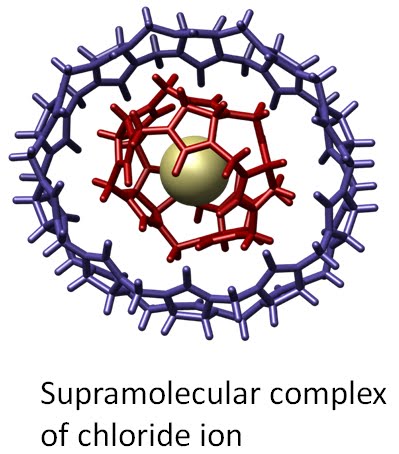
Tailoring “Molecular machine” on the atomic or molecular scale is the current subject of interest in the nano-world. In order to explore the molecular architectures behind it, the first and the foremost motivation came by mimicking the biological systems such as enzymes/catalysts/promoters along with some mechanical devices which leads to supramolecules.


The literal meaning of the supramolecule is “beyond the molecule” and the area of chemistry which mainly concentrates on such system is Supramolecular chemistry. It refers to that sort of molecular system which is made up of a distinct number [more than one] of molecular assemblies. Terms such as molecular self-assembly (1D, 2D & 3D), molecular hierarchy, molecular machine, host-guest chemistry, nanoscience are often associated with this area.

The consideration of the intermolecular [between molecules] interactions and the chemistry involved into it, rather than intramolecular [within molecule], is the major objective of the supramolecular chemistry. In this area, molecule acts as a building block unlike in traditional molecular chemistry [where atom acts as a building block]. In molecular chemistry, the binding forces between the atoms are covalent and ionic. In contrast, the non-covalent interactions such as hydrogen-bonding, dipole-dipole and dipole-quadrupole interactions, van der Waal forces and hydrophilic-hydrophobic interaction are the binding forces which hold the supramolecular assembly together. The following video highlights the procedure of molecules clustering in nanometer range.


1/25/11

NepaChem listed in Nature blogs

It is our pleasure to share with you that our blog NepaChem is listed in Nature.com blogs. Please click this link to see lots of blogs listed. Nature blog lists variety of science related blogs in its blog list after reviewing the content and other features of the blog by multiple community moderators. Moderators look for a combination of different factors. Their guidelines suggest that for a blog to be accepted it should be:
  1. Composed mostly of original material-no press releases or lists of links
  2. Primarily concerned with scientific research
  3. Updated (on average) at least once a fortnight.
We are glad that NepaChem passed all these criteria.
Thank you for your support.

1/20/11

“Top Down” and “Bottom Up” approaches in chemistry

Anant Babu Marahatta
Ph.D. student in Chemistry
Tohoku University
Japan
Who are chemists? Most of you definitely agree with me if I said “Chemists are scientists trained in the field of Chemistry and describe the properties of the matter on the level of molecules and their component atoms.” But if I said “Chemists are ‘tailor’ who make the world fashionable by implementing “top down” and “bottom up” approaches” in chemistry, most of you get confused.


Even though “Top down” and “Bottom up” approaches of chemistry were first applied to the field of nanotechnology in 1989, these terms are not so much familiar among the chemists like us. Thus this article is intended to describe the principles and the perspectives of these approaches which have grown exponentially in the last few decades.


To describe the “top down” approach, let us consider a macroscopic system and break down into the several subsystems and then start analyzing these subsystems and refine them in greater detail until the entire composition is reduced to their base elements. It can be clarified by saying that “top down” is the destructive approach to go insight into the fundamental level [going top to down] and adapt their features to make them functional at a smaller scale. Though it is a traditional way, Chemists sometimes consider the hypothesis which starts at the top with the most general concepts and works down through less general concepts to the most specific details.


On the other hand, the “bottom up” technique is based on the principle of starting from the fundamental [bottom] parts and assembled [going up] them to obtain the desired more complex system [going bottom to up]. Thus, it is the constructive approach to stitch the fundamental parts together and develop the new inventions.


In chemistry, the “bottom up” approach makes the use of atomic/molecular components and assembled them to develop the potential nano-devices. This approach is already implemented even for interconnecting the multiwalled carbon nanotubes into the multilevel interconnects (silicon integrated-circuit) with higher current conducting capacity.

1/13/11

Macroscopic and Microscopic [molecular] Gyroscopes

Anant Babu Marahatta
Ph.D. student in Chemistry
Tohoku University, Japan


Fabricating the nano devices on an atomic and molecular scale (referred as Molecular machine) is the major aspect of the Nanotechnology (sometimes shortened to “nanotech”). One of the recent approaches of the nanotech is “molecular self-assembly” which is governed by the concept “can we directly control matter on the atomic scale?” By considering this sort of challenging prospect, several gyroscopes [as shown in fig.] like molecules have been designing / synthesizing.


The similarities between the macroscopic gyroscope and the molecular gyroscope are solely based on their mechanical parts assembled. The macroscopic gyroscope which is used in aircrafts, ships to route them, contain the mechanical parts like spinning axis-axle, rotating part-rotor and the static framework-stator [gimbal] to uphold the rotor by conserving angular momentum.


Just like this, the molecular gyroscope also possesses the similar fundamental mechanical parts which are labeled in the figure. The rotational dynamics of the rotator enclosed into the case of the stator is controlled by the chemistry of the later. The animated view is included herewith.

1/7/11

Molecular Motors/Rotors/Brakes and Gyroscopes [Learn by fun!!!]

Anant Babu Marahatta
PhD student in chemistry
Tohoku University, Japan

One of the current aspects of chemistry is being a watch-dog of the nanoworld. I wonder how many of you are familiar with the microscopic machinery terms used in Chemistry that concentrates especially in the designation of the Molecular Machine. Some of them are Molecular motors, Molecular Rotors, Molecular Brakes, and Molecular Gyroscopes. You may find several of them by consulting the literatures/text books published so far.

I am sure that all of you [for the beginners only] are familiar with the “molecules” and the macroscopic devices such as Motors or Rotors or Brakes or Gyroscopes. But I think, very few of us [including chemists] have got the concrete knowledge about their applications in the nanoworld or in the Molecular machinery. We, the members of “Nepa Chem”, will assure our fellows/readers that the detail explanation with the proper schematic illustrations of all the mentioned molecular machinery devices will be posted in the days to come. For now, let me define them very shortly.


Molecular motors, Molecular Rotors, Molecular Brakes, and Molecular Gyroscopes, all these names are derived from their macroscopic analogues. Synthetic/computational chemists have already synthesized/designed the molecules or supra molecules which resembled mechanically to these macroscopic devices. Thus in this stage, you readers are about to catch the main point. I am sure that you all are thinking like this way; if the synthesized molecules/supra molecules resembled mechanically to that of the macroscopic rotating devices, then these molecules are called Molecular rotors. If the synthesized molecules/supra molecules resembled to that of the macroscopic motors [which contain rotors too, complexity arises], then these molecules are called Molecular motors.

1/2/11

DEATH BY POTASSIUM PERMANGANATE [KMnO4]

KMnO4 Solution
ANANT BABU MARAHATTA
Ph.D. student
Tohoku University, Japan

Potassium permanganate is not a new chemical for the chemists as well as for other scientists. It is generally used in even very simple lab. It is a crystalline, colored substance and soluble in water. Its salts are normally stable in crystalline form but Zinc permanganate can become explosive. In fact, storing it in tightly stopper bottles is highly dangerous. The color of the solution of KMnO4 is differed depending upon its concentration. If the concentration is about one part per million (1 PPm), the solution has a faint pink color. When the concentration is one part in 76000 (65mg/4.5dm3), the fluid becomes purple. Because of its color, solution has been used for staining purpose too. Those who use the chemical as a stain for flooring and woodwork and work with the concentrated solution must exercise with great care.