5/26/11

Setting up Computational Chemistry (Quantum Chemistry) laboratory? Technical stuffs [Part II].

Anant Babu Marahatta
Ph.D. student in chemistry
Tohoku University, Japan


(Interested fellows are suggested to read the first part [Part 1] of this article archived herewith before proceeding it).

The designation of the molecular model is another mandatory step before performing any sorts of computer calculations. Several model making software (molecule model builder) are available free of charge. Mercury, RasMol, CHIME, SwissPDB Viewer, Avogadro etc. are some of them. How to handle them is the matter of their practice. It is very essential to know that some of the molecular builders do not support the calculating software. Let’s say in this step that we could model the sample system of our interest and get the Cartesian co-ordinates or Z-matrix of it (generated by the molecular builder) which will be our input for exploring the chemistry behind it.


Let’s move to the calculating software, one of the very well-known is GAUSSIAN (currently Gaussian-09 version for the windows G09W is available) owned by the Gaussian Inc., USA. It is very flexible software developed by the quantum chemists of all around the world. It is very trustworthy for the most accurate calculations especially ab initio, MD simulation and some semi-empirical calculations. Thus, for having the copy of this software, the university must be the member of it and get the license. The normal cost for the single computer license (single CPU version) is $1150 and for the multiprocessor /core version is $1725 (excluding shipping charge). The detail information is available here.

5/23/11

Highest Rating of all Living Chemists: Prof George Whitesides

I have been following Prof George Whiteside for past one year, when I started working on microfluidics. While doing some literature search related to my work, I found some of the pioneer work done by his group. Later on found that his group has done some fundamental, pioneer work on microfluidics. For example: his group started paper microfluidics.Scientists are predicting paper microfluidics may revolutionize medical diagnostics in developing country by providing cheap and reliable diagnosis for common diseases. Now, withing three years this field has seen huge increase. Many research groups are after paper microfluidics. They lead or find the path, others just follow them. Recently, I also have been attracted to this area of research hoping to be able to do similar research work in resources limited countries like Nepal.

This guy is the highest H-index rating of all living chemists on the earth as of Nov 2010. He has published around 1100 papers in peer reviewed journals. This is amazing. In his ~45 yrs of science career (after his PhD), publishing 1100 papers means more than 20 papers per month. Looking at his research group this time, it kinda makes sense. His group has almost 4 dozens postdocs and rare graduate students. And, his group members are the best chemists he can find. They are in Harvard Chemistry department. 

5/20/11

How to write a paper to communicate your research? 101 on publishing your work.

Publishing your research work is very important in your career. Some people argue that if you don't publish your work or your work is not publishable then you have not done anything. It is said that if your research doesn't generate papers, it might just as well not have been done. "Interested and unpublished" is equivalent to "non-existent".

Writing your research findings and publishing them on good journals requires extra effort and skill than just research. Publishing work should be a part of research itself. The effective communication of scientific research is vital both to the scientific community and to a scientist’s career.


Recently, American Chemical Society (ACS) has produced series of video interviews with top figures of the related field to assist authors and reviewers in understanding and improving their experience with the processes of writing, submitting, editing, and reviewing manuscripts.

This time, I want to share an interview with Prof George Whitesides from Harvard University. He is the chemistry professor and has published more than one thousand research articles.

If you are looking for answers of following questions then listen and watch his interview.
  • When should you begin to think about writing up your research for publication?
  • How do your students handle your approach of writing while you research?
  • How do new technologies help scientists communicate their work?
  • How many drafts does each paper undergo? Do you have your papers undergo an internal review?
  • Do authors need to be thinking of marketing their articles?
  • How concerned should I be about the title and abstract of my papers?
You can listen his interview by clicking the link below.


5/18/11

Setting up Computational Chemistry (Quantum Chemistry) laboratory? Technical stuffs-Part I

Anant Babu Marahatta
Ph.D. student in chemistry
Tohoku University, Japan


(Being a 4th year Doctoral student majoring Quantum chemistry, “Nepa Chem’s-facebook-status” on 11th April 2011 motivated me to write this article. It is solely dedicated to our energetic seniors/colleagues who are planning to introduce the Computational Chemistry lab in Nepal.)

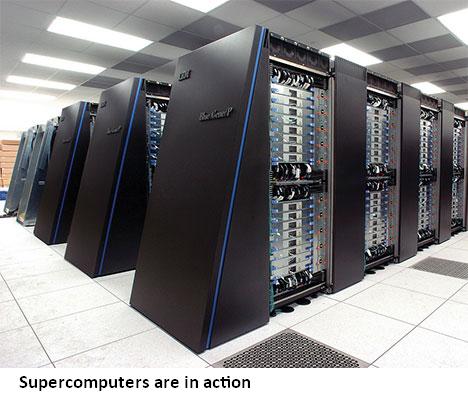
This informative article is intended to provide some pre-requisites needed to set up very basic computational chemistry (Quantum Chemistry) laboratory. It is not valid to those who want to establish the high-tech lab by installing the supercomputing calculators into the networks which is a very common way in the renowned research institutions. Even though “LINUX” computer operating system with “Emacs”, world's most powerful text editor, is very common to be installed into the computer, the basic computational laboratory can be set up in the absence of them.

Thus, the person who is master on handling the networking systems of the supercomputers (calculators) with the personal computer (local machine) having installed LINUX is assigned as an administrator of the computational chemistry laboratory. Therefore, nominating a technical staff with such assignments is the crucial point to set up the advanced computational laboratory.

Let me start by defining computational chemistry, a branch of chemistry that uses principles of computer science to assist in solving chemical problems. Thus the computers with good memory are the very fundamental tools of it.

5/13/11

Regional Chemistry Seminar in Biratnagar Concluded

Regional Chemistry Seminar was recently concluded in Biratnagar, Nepal. Hundreds of chemistry graduate students, researchers and professors from Nepal and India got together to share their research in the form of oral and poster presentations. We have received details of the program from the organizer of the program. At the last you will see some of the pictures from the program.
Regional Chemistry Seminar 2011, Biratnagar, Nepal


5/10/11

Japan and US: You must construct “Onkalo”- Fukushima Issue

Anant Babu Marahatta
Sendai, Japan

(News analysis)

Being one of the eyewitnesses from Sendai, Japan, I should proudly say that it was not so big issue about the ~9 M mega-quake that shook some of the major cities of northeast-Japan including Sendai of Miyagi prefecture on March 11, 2011, as all the skyscrapers are still standing unlike the case in Haiti few months ago. Even the mechanical damage caused by the big Tsunami, the consequence of that tremor, has been stopped broadcasting by the world’s leading news networks as well as covering by the front pages of the leading newspapers.

However, the major technical damage of the Tsunami which is being faced by the Fukushima based nuclear power plants, each has the capacity of storing 100s of tons of nuclear fuel, has been publishing with the greatest priority. It is reminded that the storage of all the crippled power plants had contained tons of nuclear fuel and were fully operated during the time of Tsunami. Thus, it is not surprising to mention “Japan is having a big nuclear disaster and crisis” which has presented the crucial question to the world “what to do with nuclear energy?” and I believe (& you too) the world has seriously begun thinking about it.

The current situation of the nuclear disaster in the world after receiving ‘Fukushima-nuclear plants threats’, can be envisioned by this news headline “In search of a nuclear disposal site” published by the “Japan Times” on 7th April 2011. It's every nation's responsibility to construct permanent nuclear waste repositories on its own territory. It is a praiseworthy work that around 300 km northwest of Finland's capital, an island named “Helsinki” houses the potential site for one of the world's first permanent underground high-level nuclear waste repositories “Onkalo” (Finnish language for “hiding place”).The repository is hundreds of meters deep and is designed to store high-level nuclear waste for at least 100,000 years. Research is still under way, but the dumping of the spent fuel is scheduled to begin around 2020.

5/7/11

Congratulations to Dr. Birendra B Adhikari for the completion of PhD


Birendra Babu Adhikari has successfully completed his PhD Degree from Saga University, Japan in March 2011. He had been working in the field of supramolecular chemistry. Congratulations Dr. Adhikari.


During his graduate study, his research was focused on design and synthesis of novel organic molecules for ionic and molecular recognition. He had studied the ion recognition behavior of calixarene derivatives having different ring size and different molecular flexibility and had studied the conformational behavior of their metal ion complexes. He had successfully developed some heteracalixarene ligands that can be applied for selective scavenging of toxic cations as well as the recovery of valuable metal cations. The title of his dissertation is “Multiple proton ionizable calixarene derivatives with different ring size: Towards engineering for separation and recovery of toxic and valuable metal cations.”

Initially he had entered his supervisor’s research group in the capacity of a researcher with main responsibility of synthesizing calixarene-based organic apohosts that were exploited to evaluate their hydrogen and carbon dioxide gas storage behavior. The research group is soon reviving the same project and he will be working in the capacity of a post-doctorate researcher with main duties of designing and synthesizing organic clathrates and metal organic frameworks (MOFs) for study of their hydrogen gas storage behavior.

5/6/11

Diamondoids: Potential candidate for the Nanotech.

Anant Babu Marahatta
Tohoku University
Sendai, Japan

One of the current aspects of chemistry is being a watch-dog of the nanoworld which is a major discipline in Nanotechnology. In the context of building materials for nanotechnology components and in “bottom-up” approaches of chemistry, diamondoids have been of great interest in recent years.


Most generally, diamondoids refer to structures that resemble diamond consisting of a number of six-member carbon rings fused together. They are strong, stiff structures containing dense, 3-D networks of covalent bonds, formed chiefly from first and second row atoms with a valence of three or more. Various hetero-atoms which might include N, O, Si, S, and so forth, some time, act as the major substituent. 

5/5/11

Exclusives from Jeju Island : Spring Meeting of Korean Chemical Society (April 28-29, 2011)


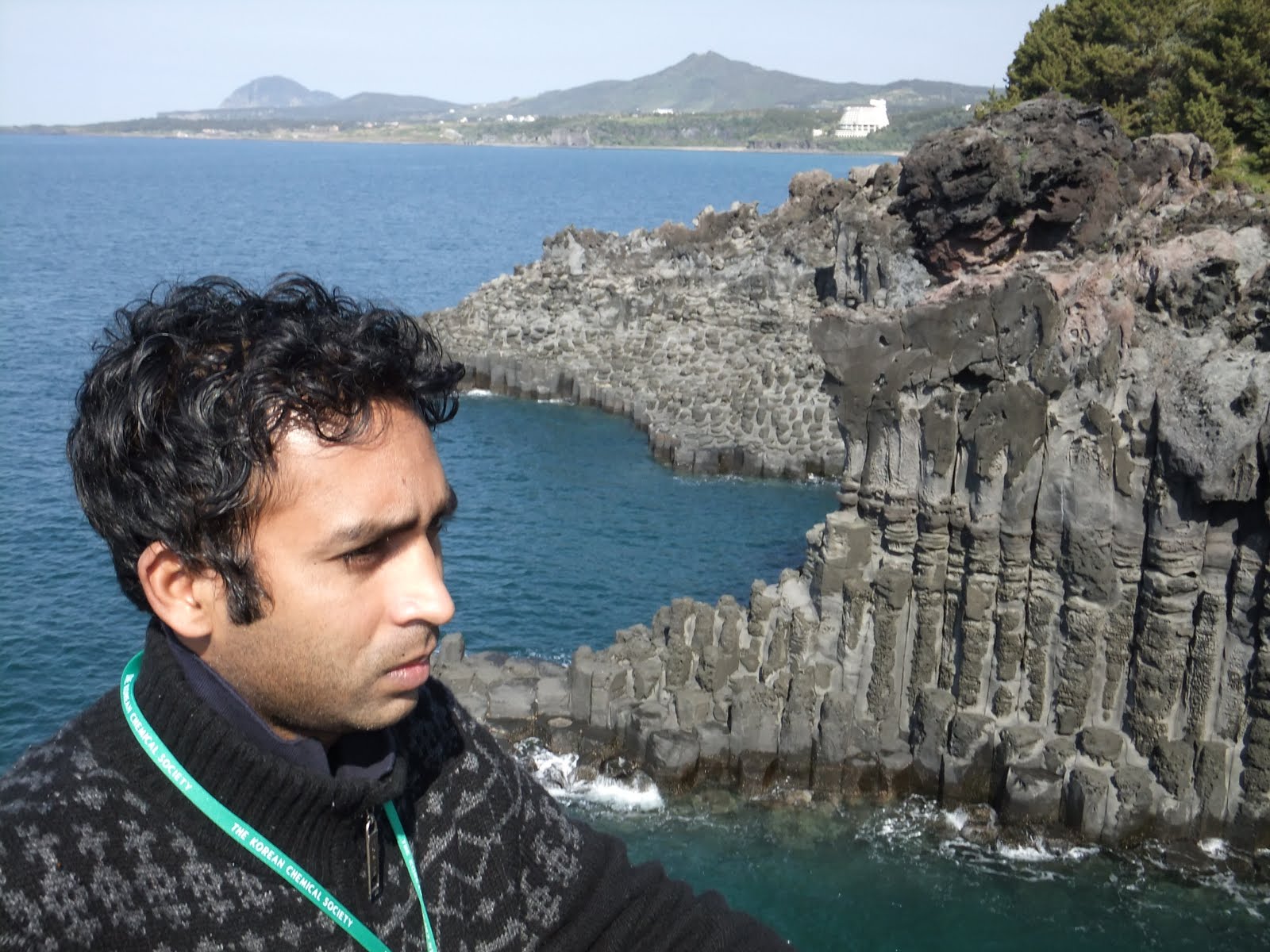
With the beginning of this summer, we from the School of Chemical Engineering-Yeungnam Univeristy, Korea, had an enjoyfull travel to the “Jeju Island”. We visited Jeju do(so called) as a part of participation in biannial meeting of Korean Chemical Society on april 28-29. Here you can see some exclusives of our group from jeju island.

5/4/11

Congratulations to Dr. Beni B. Dangi


We have one more Chemistry Doctorate in our community. Dr. Beni B. Dangi has successfully completed his PhD Degree form University of Nevada, Reno (UNR) in spring 2011. He had been working in chemistry department of UNR in the field of Mass Spectroscopy.

During his graduate study, he had been working to develop a tandem mass spectrometer, consisting of a quadrupole ion trap (QIT) and a time-of-flight for ion mass resolution and photophysics. The main goal of the research was to develop a new ion trap that would improve the mass resolution as well as ion photophysics with the similar ion trapping behavior compared with existing hyperbolic ion trap. He was bale to identify the parameters affecting mass resolutions in linear and reflectron time-of-flight modes and significant improvements of mass resolution were accomplished with the new optimized design. He was also able to design a molecular beam source which was fabricated and characterized for the application in ion-molecule collision experiments.

The title of his dissertation is “Development of ion trap/time-of-flight mass spectrometry for mass resolution and photophysics.” His research has been published in peer reviewed journals and articles and will be provided upon request.

Congratulations to Dr. Dangi on your great achievement and we all wish all the best for your future!!!!!!!!